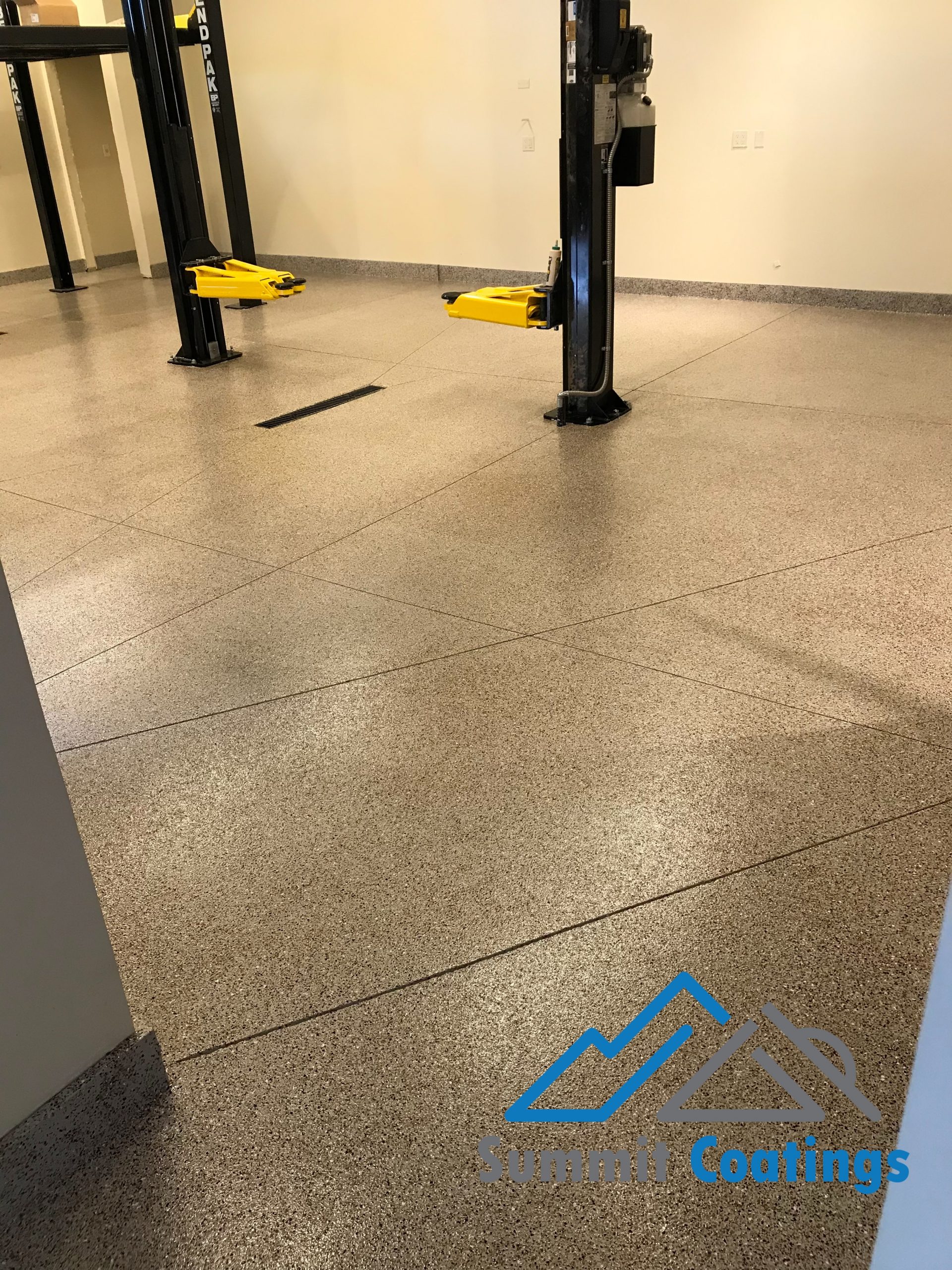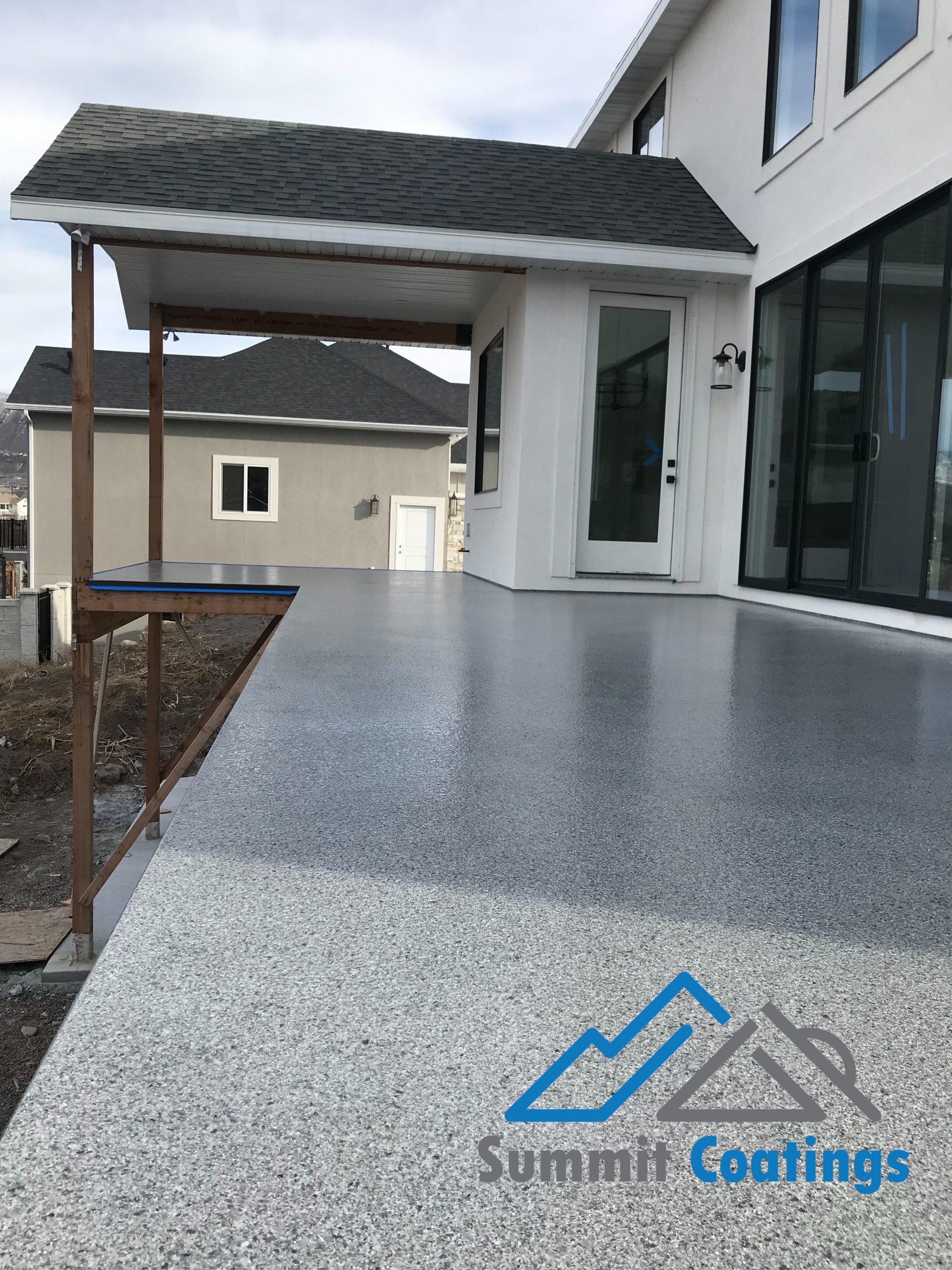
People often use cement and concrete as if they mean the same thing. They do not. The simplest way to explain the difference between concrete and cement is this: cement is one ingredient in concrete. Concrete is the finished material used for driveways, patios, walkways, and many other surfaces.
That distinction matters when a Utah homeowner describes a worn slab. It also matters when someone shops for a repair or asks how to protect an outdoor surface.
A contractor needs to know what material is involved. The concern may involve a bagged binder, fresh concrete, or an existing concrete surface. Using the right term keeps the proposed work focused on the surface that is present.
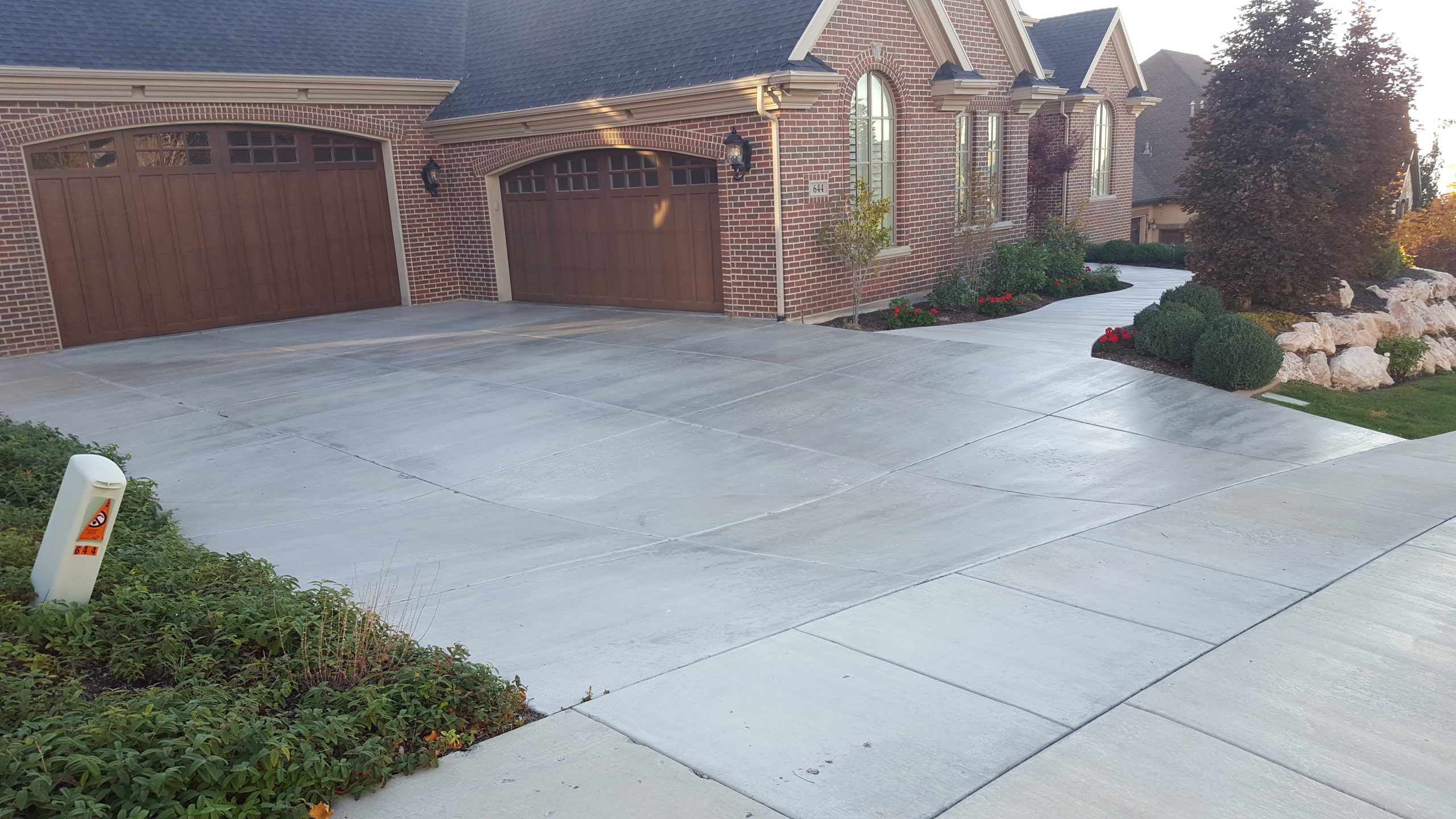
The short answer: cement is part of concrete
The American Cement Association explains that concrete is made by mixing cement, water, and aggregates such as sand and gravel. Cement acts as the binder. When it reacts with water, it helps hold the aggregate together as the mixture hardens.
Think of flour in a loaf of bread. Flour is essential. It is not the finished loaf.
In a similar way, cement is essential to conventional concrete. It is not the entire concrete slab.
This is the core difference between concrete and cement:
- Cement is a fine manufactured powder used as a binder.
- Concrete is a composite material made with cement, water, and aggregate.
- A driveway or patio is normally concrete, not solid cement.
The distinction does not require technical training. It only requires separating an ingredient from the finished mixture.
How the difference between concrete and cement affects the mix
Cement starts as a dry powder. The association also explains how cement is made. Manufacturers process mineral materials at high heat.
This produces clinker. They grind that clinker with other materials to make cement.
Once cement and water are combined, a chemical reaction begins. The paste coats the sand and stone. The mixture then cures into a solid mass.
Each ingredient affects the finished concrete. Water content, placement, finishing, curing, and exposure matter too.
Adding more cement does not fix every concrete problem. The American Concrete Institute says moisture, cracks, surface profile, and past treatments should be checked before choosing a protection system. FHWA also links concrete distress to freeze-thaw cycles, salts, finishing, and curing. A photo cannot confirm the cause.
What concrete is
Concrete is the material people use after the mixture hardens. It can form a foundation, driveway, sidewalk, patio, or porch. It can also form a pool deck, wall, or structural element.
Aggregate gives the mixture bulk. Hardened cement paste binds those particles together.
Fresh concrete is workable for a limited period. Hardened concrete is strong. It can still face moisture, staining, surface wear, cracking, or movement. Its condition depends on the original installation and the site around it.
For homeowners, this means a request to “seal the cement driveway” will usually be understood as a request to assess and seal a concrete driveway. The everyday phrase is common, but the accurate material name is concrete.
Why the difference matters for an existing surface
Knowing the difference between concrete and cement helps separate several kinds of work that sound similar but are not interchangeable.
Mixing or placing new concrete
New placement starts with a concrete mix. The project may require choices about the mixture, thickness, and reinforcement. Joints, slope, finishing, and curing also matter.
These choices occur before the mix hardens. The result is the slab a homeowner walks or drives on.
Repairing damaged concrete
A repair starts with the condition of existing concrete. A professional may need to look at cracks, scaling, movement, drainage, contamination, or weak material. A coating or sealer cannot correct every structural or moisture problem. The cause and intended use need to be considered before a treatment is selected.
If a sound slab needs resurfacing rather than sealing, Summit Coatings describes concrete overlays as a separate service for existing concrete surfaces.
Sealing concrete
Sealing is work performed on an existing concrete surface. It is not the same as making cement or pouring a new slab. Summit Coatings lists residential concrete sealing services in Salt Lake City and Northern Utah for surfaces such as driveways, patios, walkways, pool decks, porches, and entryways.
The surface still needs an honest assessment. Age and past products can affect whether a sealing approach is suitable. Moisture, wear, damage, and intended use also matter.
This article cannot diagnose a slab. It cannot promise what a product will do on an unseen surface.
Concrete, mortar, and grout are also different
Cement appears in more than one building material. That can add to the confusion. The American Concrete Institute’s definitions of concrete, mortar, and grout separate the materials by their ingredients. The Concrete Masonry & Hardscapes Association also explains that mortar bonds masonry units while grout fills masonry cores or cavities.
- Mortar combines cement paste with fine aggregate and is used in joints between masonry units.
- Grout combines cementitious material and water, often with fine aggregate, and is placed into spaces such as masonry cores or cavities.
- Concrete combines hydraulic cement, water, and aggregate, including the coarse aggregate that distinguishes it from mortar.
The materials have different proportions and jobs. They should not be treated as automatic substitutes for one another. A bag label and the manufacturer’s instructions identify what the product is designed to do.
How to describe your concrete concern clearly
You do not need to identify a technical failure before contacting a professional. A few direct observations are more useful than guessing at a diagnosis.
Note where the surface is located and how it is used. Describe whether you see cracks, flaking, stains, a worn finish, standing water, or a previous coating. Mention whether the change is new, spreading, or limited to one area. If known, share the approximate age of the slab and any prior repair or sealing history.
Photos in normal light can show the overall area and a close view of the concern. Do not chip, grind, cut, or chemically strip the surface just to investigate it. ACI says preparation must match the selected system.
A poor method can bruise the concrete surface. Leave destructive work to a qualified professional who can assess the slab and any existing coating first.
Common questions about the difference between concrete and cement
Can a driveway be made from cement alone?
A typical driveway is made from concrete. Cement is the binder within that concrete. Calling it a cement driveway is common in casual speech, but it does not describe the full material.
Is cement stronger than concrete?
That comparison is misleading because cement is an ingredient and concrete is a finished composite. Performance depends on the complete concrete mixture, installation, curing, design, exposure, and use. A single ingredient does not tell you how a slab will perform.
Does a concrete sealer turn back into cement?
No. A sealer is applied to an existing concrete surface. It does not reverse the concrete-making process or transform hardened concrete back into cement.
Can sealing fix every crack?
No. Cracks can have different causes, and a surface treatment is not a universal structural repair. Movement, moisture, drainage, and the condition of the slab may need evaluation before any coating or sealing decision.
Is all concrete the same?
No. Concrete mixtures and installations vary. Aggregate, water-to-cement ratio, additives, reinforcement, jointing, finishing, curing, weather, and intended use can all influence the finished surface. That is one reason an exact recommendation should follow an assessment instead of a generic online answer.
Start with the correct surface
The difference between concrete and cement is simple but useful: cement binds the mixture, and concrete is the hardened material created from that mixture. For a homeowner, the practical next step is to focus on the condition and use of the concrete surface. Do not select a treatment from the material name alone.
Do you have a driveway, patio, walkway, pool deck, porch, or entryway in the Summit Coatings service area? Review the company’s concrete sealing service and request an assessment of the actual surface. A site-specific review can account for its condition, exposure, previous treatments, and intended use without relying on a remote guess.