A durable garage coating starts before any resin reaches the slab. Epoxy garage floor preparation is the inspection, cleaning, repair, and mechanical profiling work that creates a sound surface for the selected system. When preparation is rushed, even a high-quality coating can lose adhesion or reveal defects from the concrete below.
Salt Lake City garages face their own mix of conditions. Winter vehicles carry water and deicing residue inside. Hot tires, oil, stored chemicals, and years of ordinary use can leave contaminants in the slab. Utah temperature changes may also expose cracks or movement that need to be understood before coating begins.
This guide explains what a professional looks for and why each preparation step matters. It is not a do-it-yourself removal guide. Grinding equipment, dust control, electrical service, and unknown existing coatings can create hazards that are better handled by trained installers.
Preparation starts with the condition of the slab
The first step is not grinding. It is learning what is already on and inside the concrete. An installer needs to see the whole floor, including corners, control joints, the garage-door edge, and areas normally covered by storage.
The American Concrete Institute’s guidance for surface preparation emphasizes evaluating the concrete, contaminants, moisture, cracks, and the surface profile required by the protection system. That sequence matters because different conditions call for different preparation and repair methods.
A garage assessment may include questions such as:
- Is the slab bare, sealed, painted, or previously coated?
- Are cracks stable, or do they show signs of continuing movement?
- Is there flaking, weak concrete, or a smooth machine-troweled finish?
- Have oil, solvents, tire products, or other materials soaked into the floor?
- Does the slab show moisture staining or efflorescence?
- Where does water collect, and how is the garage used?
No single photograph can answer all of those questions. A site review gives the installer a better basis for matching preparation to the actual floor.
Moisture deserves attention before epoxy
Concrete can look dry at the surface while still transmitting moisture vapor. Ground conditions, drainage, slab construction, recent cleaning, and weather can all affect what is happening below a coating.
Moisture does not automatically rule out every coating system. It does mean the installer should identify the condition before choosing products and primers. A visible damp area, mineral deposits, or recurring darkening near an edge should be disclosed during the assessment.
Utah’s dry air can make the top of a slab appear ready sooner than the deeper concrete. That is one reason visual inspection alone is not a moisture test. The coating manufacturer’s requirements and the selected installation system should guide any testing and acceptance criteria.
Contamination must be removed, not hidden
Garage floors collect more than dust. Oil, silicone tire dressings, cleaners, road residue, and old sealers can interfere with adhesion. Simply coating over a stain does not make the contaminant disappear.
The preparation approach depends on what is present and how deeply it has penetrated. An installer may use appropriate cleaning and mechanical methods, then recheck the area. Severely contaminated concrete may require additional treatment or a change in the proposed system.
Homeowners can help by clearing the floor and sharing its history. Mention past spills, acid washing, patch products, paint, or sealers even if they were applied years ago. Do not mix household chemicals or use an aggressive stripping product immediately before the assessment. Residue from a last-minute cleaning attempt can make the surface harder to evaluate.
Mechanical profiling creates a bondable surface
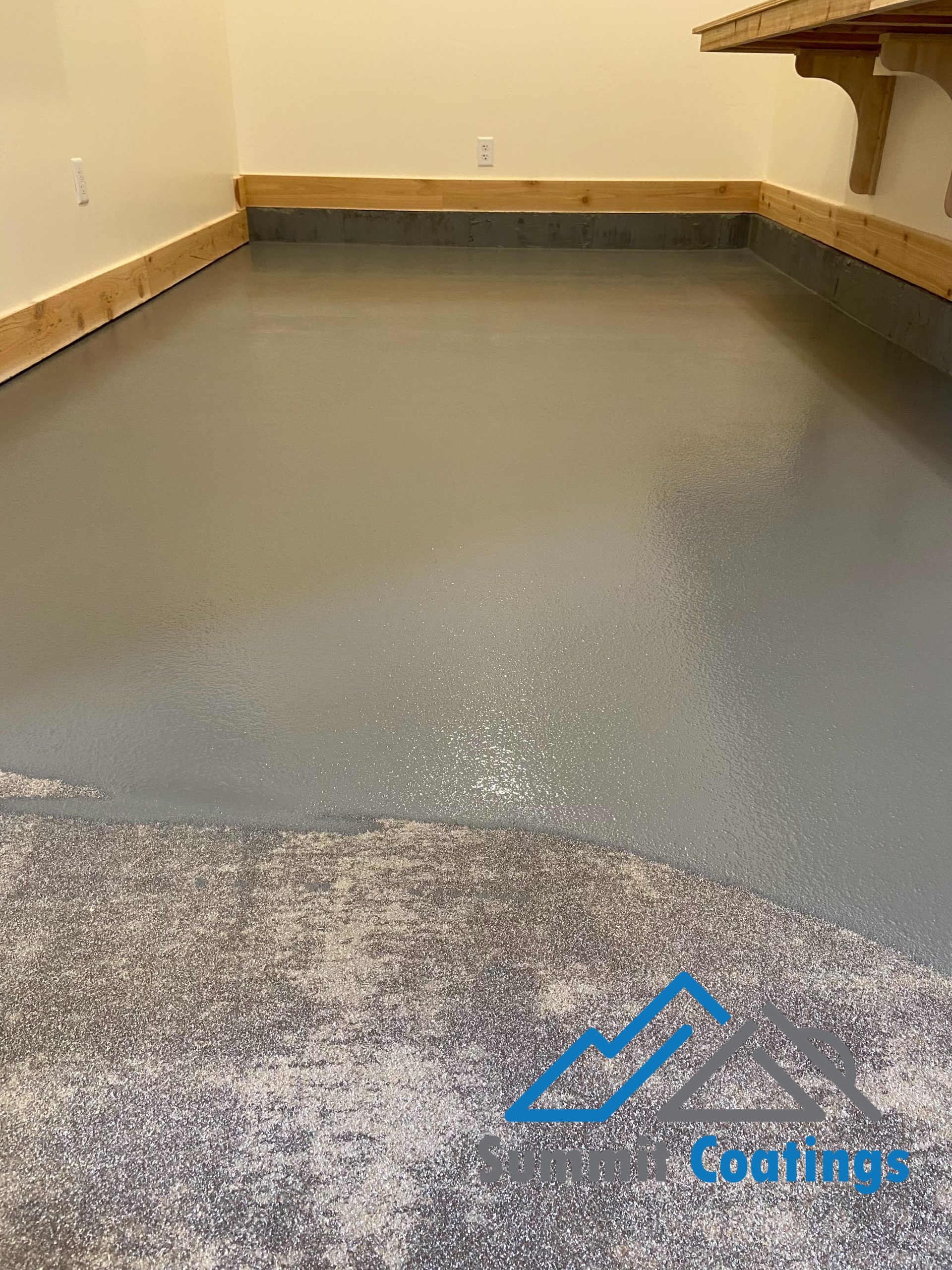
Epoxy does not bond well to every concrete finish in its existing state. Mechanical preparation removes weak surface material and creates a texture that the selected coating can grip. Professional installers commonly use diamond grinding or other controlled equipment based on the slab and system requirements.
The goal is not to make the concrete look scratched. The goal is to produce the correct concrete surface profile consistently across the floor. Edges, corners, joints, and the area near the garage opening need the same deliberate attention as the center.
Dust control is part of this work. Concrete grinding can release fine silica-containing dust, so appropriate equipment and jobsite controls matter. This is another reason garage floor prep is more than a weekend cleaning step.
You can see examples of finished systems in the Summit Coatings epoxy gallery, but the finished appearance does not show the preparation underneath. The hidden steps are what help the visible finish stay attached.
Cracks and surface defects need individual decisions
Not every line in a slab is the same. A control joint has a different purpose from a random crack. A shallow surface defect differs from a crack that continues to move. Repairs should be selected after the installer identifies the type and condition of the defect.
Preparation may expose small flaws that were not visible under dirt or an old coating. That is useful information. It allows repair work to happen before the decorative layers are installed.
An epoxy coating should not be presented as a structural repair. If movement, settlement, drainage, or severe deterioration is suspected, the floor may need evaluation outside the normal coating scope. A responsible installer defines that boundary before installation.
What homeowners should do before the crew arrives
The installer should provide project-specific instructions. In general, homeowners can make the process smoother by removing vehicles, shelves, boxes, mats, and movable equipment from the garage. Access to the full perimeter helps the crew prepare the surface consistently.
Also discuss these items in advance:
- How long the garage must remain clear after installation.
- Which fixed cabinets or appliances will stay in place.
- Where the crew can access power and the work area.
- How pets and household members will be kept away from the installation zone.
- Whether weather or temperature could affect the planned system.
Do not wash the floor unless the installer asks you to. Added water can complicate moisture conditions and delay the next step.
Preparation should match the coating system
There is no universal prep recipe for every garage. A decorative flake system, quartz system, or other resinous floor may have its own primer, profile, repair, and recoat requirements. The installer should work from the system specifications rather than treating preparation as a generic step.
Summit Coatings offers epoxy coating systems for residential and commercial concrete. The right discussion begins with how the garage is used, the condition of the slab, and the appearance the homeowner wants.
For a Salt Lake City property, local exposure also belongs in that discussion. Snowmelt at the garage door, seasonal temperature swings, and vehicle traffic all affect how the floor should be assessed and detailed.
Common questions about epoxy garage floor preparation
Can epoxy go over an existing garage-floor coating?
Sometimes an existing layer can be part of a new system, but only if its identity, adhesion, and condition are suitable. Many floors require removal of the old material so the installer can reach sound concrete. The answer depends on what is present, not just how it looks from above.
Will epoxy fill every crack?
No. Crack treatment and coating are separate decisions. Some defects can be repaired as part of preparation, while active movement or structural concerns may require another type of evaluation.
Is acid etching the same as mechanical grinding?
No. They create surfaces in different ways and do not offer the same control on every slab. Professional preparation is selected around the concrete and the coating manufacturer’s requirements.
Why does the garage need to be completely empty?
Clear access helps the crew inspect, prepare, clean, and coat the entire intended area. Working around stored items can leave inconsistent edges and hidden untreated sections.
Build the coating on a prepared foundation
Good epoxy garage floor preparation is a series of informed decisions, not one quick step. The slab is inspected for moisture, contamination, cracks, weak material, and previous treatments. It is then cleaned, repaired, and mechanically profiled to suit the selected coating system.
If your garage is in Salt Lake City or another community in Summit Coatings’ service area, contact the team to arrange an assessment. A site-specific review can identify what the concrete needs before a coating is selected.