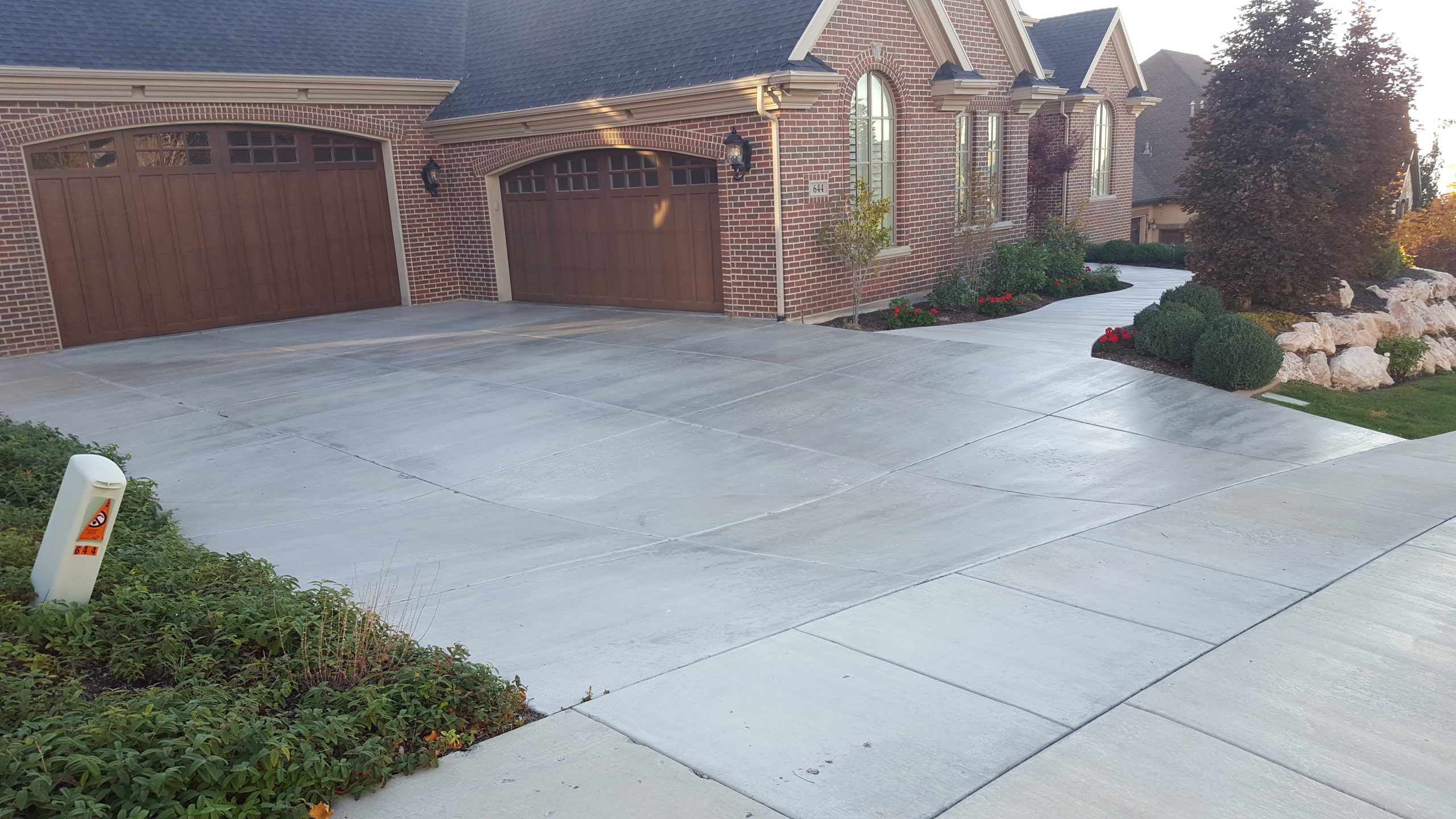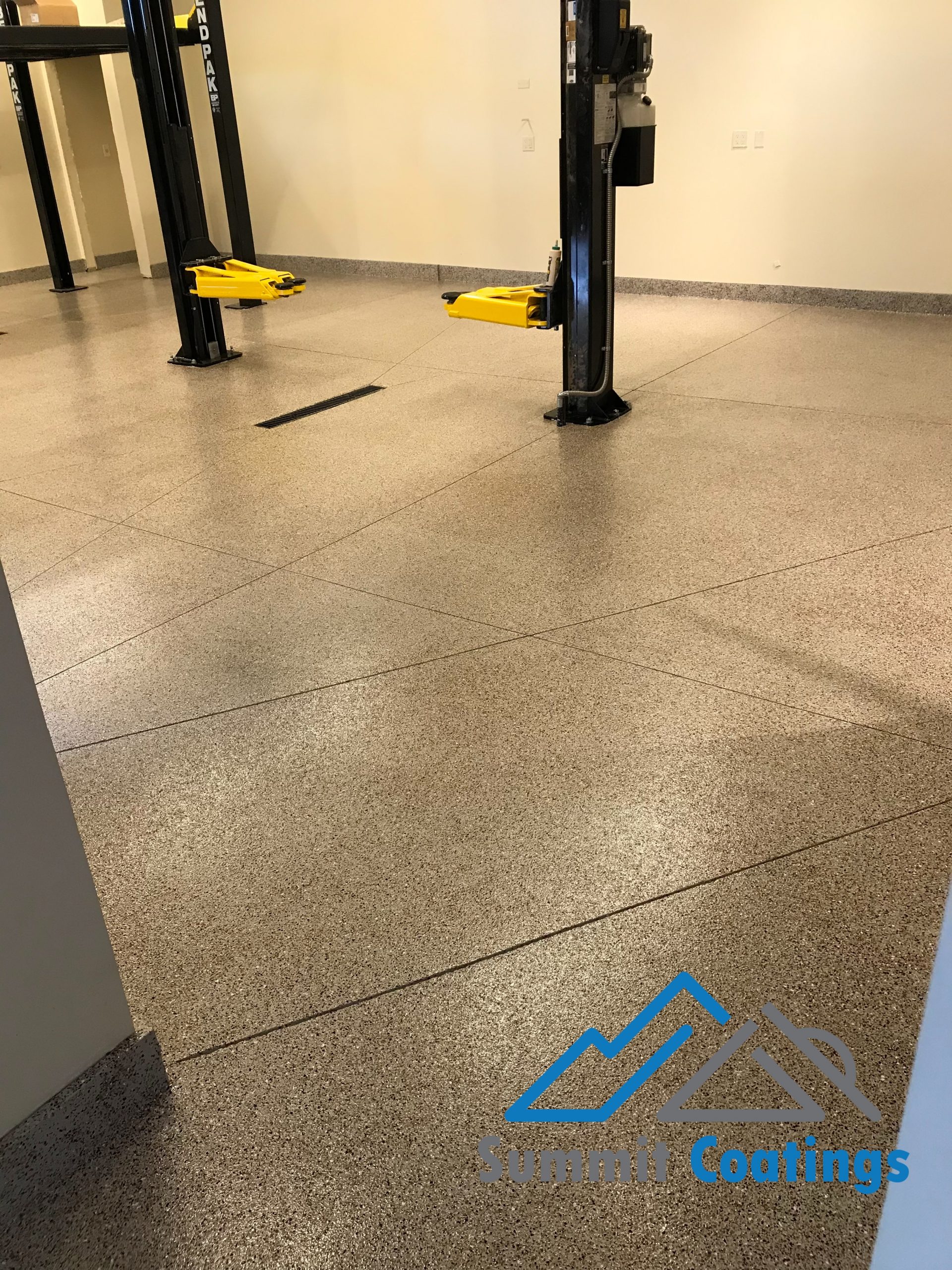
Your garage floor takes a beating in Utah. Hot summers, freezing winters, and de-icing salt tracked in on your tires all work against bare concrete. If you are weighing polyaspartic vs epoxy in Salt Lake City, you are asking the right question, because the coating you pick decides how well that floor holds up for years. Both are professional-grade systems that Summit Coatings installs across the Salt Lake Valley and Utah County. This guide breaks down how they differ so you can choose the right one with confidence.
What’s the Difference Between Epoxy and Polyaspartic?
Both coatings start with the same goal: seal your concrete, protect it, and give it a finished look. The chemistry under the hood is where they split.
Epoxy is a two-part resin. You mix a base with a hardener, and it cures into a thick, rigid, high-build layer that bonds tightly to concrete. It has been the standard garage floor coating for decades.
Polyaspartic is an aspartic-ester polyurea, a fast-curing cousin of polyurethane. In plain terms, it is a thinner, more flexible coating that cures far faster and resists sunlight better than epoxy.
Neither is “low-quality” or “premium” by default. They are different tools. Many of the best floors we install actually use both: an epoxy base coat for build and adhesion, then a polyaspartic topcoat for speed and UV protection.
Cure Time & Installation Speed
This is the biggest day-to-day difference for most homeowners.
Epoxy cures slowly. Each coat typically needs several hours to set, and the full system often needs a day or more of dry time between coats before you can walk or park on it. A standard epoxy job can stretch across two to three days.
Polyaspartic cures fast. It sets in a fraction of the time, which is why a full polyaspartic garage floor in Utah can often be installed in a single day. You drop the car off in the morning and park on it the next day.
Quick comparison:
| Factor | Epoxy | Polyaspartic |
|---|---|---|
| Cure speed | Slow, hours per coat | Fast, minutes to an hour |
| Typical install time | 2 to 3 days | Often 1 day |
| Return to use | 24 to 72 hours | Roughly 24 hours |
| UV stability | Can amber or yellow | Stays color-stable |
| Temperature window | Narrower | Wider, works in cooler temps |
| Flexibility | Rigid | Flexible, handles movement |
| Common role | Base coat | Topcoat or full system |
The fast cure is not just about convenience. Polyaspartic can be applied in a wider temperature window, which matters in Utah where garage temps swing hard between seasons.
Want to see the finished results before you decide? You can browse finished garage floors in our gallery to compare flake and metallic looks.
Durability in Utah’s Temperature Swings
Utah concrete lives through real freeze-thaw cycling. Water seeps into the surface, freezes overnight, expands, then thaws by afternoon. Over time that push-and-pull stresses any coating.
Epoxy is hard and abrasion-resistant, which is great for impact and dropped tools. Its rigidity is also its weak point. When concrete moves with temperature swings, a stiff coating is more prone to cracking or chipping at stress points.
Polyaspartic is more flexible. It moves a little with the slab instead of fighting it, so it tends to resist chipping from freeze-thaw stress and thermal movement. It also holds up well against the road salt and de-icing chemicals that ride in on your car all winter. The American Concrete Institute documents how freeze-thaw exposure degrades unprotected concrete, which is exactly why a durable coating matters here.
For a garage that sees snow, salt, and big seasonal temperature shifts, the flexibility of polyaspartic gives it a real edge in long-term durability. That said, an epoxy base under a polyaspartic topcoat gives you the best of both: hardness plus flex.
UV Stability & Color Retention
If any sunlight reaches your garage floor, this section matters.
Epoxy is sensitive to UV. Under direct or reflected sunlight, it can amber, meaning the finish slowly yellows and dulls. This is a known trait of the chemistry, not a defect, and it is why standard epoxy usually needs a protective topcoat when UV is a concern.
Polyaspartic is UV-stable. It keeps its color and clarity even with sun exposure, which is a genuine consideration at Utah’s high altitude, where UV intensity runs stronger than it does at lower elevations. Polyurea coatings like polyaspartic were built for outdoor and high-exposure use, a point the Polyurea Development Association covers in its technical resources.
This is a big reason polyaspartic works so well as a topcoat. It locks in the color of a decorative flake or metallic system and keeps it looking sharp for years, even near an open garage door or south-facing windows.
What Affects Your impact
service scope between the two systems comes down to a handful of factors, not a fixed formula. Here is what actually moves the number.
- Materials. Polyaspartic resin generally carries a higher material impact than standard epoxy. A full polyaspartic system uses more of that pricier material than a system that only uses it as a thin topcoat.
- Number of coats. A hybrid build with an epoxy base and a polyaspartic topcoat has more layers than a single-material job, which affects labor and materials.
- Concrete prep. This is the quiet driver. Grinding, patching cracks, and fixing pitting or old coatings takes time. The rougher the shape your slab is in, the more prep it needs, regardless of which coating you pick.
- Timeline and labor. Polyaspartic’s fast cure can compress a job into one day, which changes the labor picture compared to a multi-day epoxy install.
- Finish and system. Decorative flake, metallic effects, and extra topcoats add material and steps versus a basic solid-color seal.
The honest takeaway: the coating you choose is only one part of the service scope. The condition of your concrete and the finish you want often matter just as much.
Which Should You Choose?
There is no single winner. The right call depends on your garage and your priorities.
Lean toward polyaspartic if you:
- Want your garage back in a single day
- Get direct sunlight on the floor and want color that lasts
- Deal with heavy freeze-thaw or lots of winter road salt
- Value long-term flexibility and UV stability
Lean toward epoxy if you:
- Want a proven, practical base layer
- Have an interior garage with little to no sun exposure
- Are building a hybrid system with a polyaspartic topcoat
For most Salt Lake City garages, the strongest answer is a hybrid: an epoxy base for build and adhesion, finished with a polyaspartic topcoat for speed, UV resistance, and flexibility. That combination is why it is often the best garage floor coating for Salt Lake City homes that see real sun and real winters.
Ready to match a system to your slab? Explore our professional epoxy coating systems or see options for garage floor coatings in Salt Lake City.
FAQ
Is polyaspartic really better than epoxy?
Not always. Polyaspartic cures faster, stays UV-stable, and flexes with the slab, which suits Utah’s climate well. Epoxy is harder and makes a strong, practical base coat. The best floors often combine both.
Can a garage floor really be coated in one day?
Yes. Because polyaspartic cures so quickly, a full polyaspartic garage floor in Utah can often be installed in a single day, with the floor ready to use the following day. Concrete condition and prep needs can affect the timeline.
Will epoxy turn yellow in my garage?
Standard epoxy can amber, or yellow, under UV exposure. If your floor gets sunlight from an open door or windows, a UV-stable polyaspartic topcoat prevents that color change.
Does polyaspartic hold up to Utah winters and road salt?
It does. Polyaspartic resists de-icing salts and flexes with freeze-thaw movement, which helps it avoid the chipping that can affect more rigid coatings during Utah’s cold months.
Do you install both epoxy and polyaspartic?
Yes. Summit Coatings installs epoxy systems, polyaspartic systems, and hybrid builds that use both, so we can match the right system to your concrete and how you use your garage.
Get the Right Coating for Your Garage
The best garage floor coating in Salt Lake City is the one matched to your concrete, your sun exposure, and how you use the space. Both epoxy and polyaspartic are strong, professional systems, and the right choice comes down to your specific garage.
Not sure which coating fits your garage? Get a free quote in Salt Lake City and Summit Coatings will walk your slab, talk through your goals, and recommend the system that will last.