An outdoor court does not need to look severely damaged before play begins to change. Worn texture can affect footing. Faded boundaries can make calls harder. Low areas may hold water, while cracks can grow through the playing surface. Pickleball court resurfacing addresses the court as a complete system, from the existing base and drainage to the color coats and regulation lines.
Salt Lake City courts experience strong sun, winter moisture, freezing conditions, and seasonal temperature swings. Those exposures make early inspection valuable. Resurfacing at the right stage can restore a consistent playing surface while giving the contractor a clear view of defects that need attention first.
Signs a pickleball court needs professional attention
Surface age alone does not determine whether a court is ready for work. Use and exposure vary from one property to another. Look for changes in performance and condition across the entire playing area.
Common signs include:
- Color that has faded unevenly or lost contrast
- Playing lines that are worn, chipped, or difficult to see
- Smooth or polished traffic areas with inconsistent traction
- Cracks that have widened, returned, or spread
- Flaking, peeling, or loose coating
- Birdbaths or low spots that retain water after nearby areas dry
- Stains, organic growth, or embedded debris that routine cleaning does not remove
- Abrupt patches that change ball response or footing
A single symptom does not determine the repair. A crack, for example, may be a surface-level issue or evidence of movement below. Standing water may reflect a localized depression, drainage around the court, or the original base construction.
Photograph changes over time and note where water remains after a storm. That history helps the resurfacing contractor understand whether the problem is stable or progressing.
Inspection comes before color selection
New colors and crisp lines are the visible result, but the inspection controls the scope. The contractor should review the court perimeter, fence-line edges, net-post areas, drainage path, transitions, cracks, and previous repairs. Surface contamination and coating adhesion also matter.
USA Pickleball provides court construction and surfacing resources that address base work, repair, coatings, and striping as connected parts of a court project. The organization’s court construction manual is also a useful reference for planning court geometry and related details.
For an existing Salt Lake City court, a field assessment can document:
- Base material and visible stability
- Drainage and water-retention areas
- Crack locations and previous repair behavior
- Adhesion of the existing coating
- Surface texture and wear patterns
- Net, posts, fencing, and access constraints
- Intended use, including single-sport or multi-sport striping
This information should be settled before the finish palette becomes the main conversation.
Cleaning and preparation set the foundation
The court must be clean enough for repairs and new layers to bond as designed. Dirt, chalk, leaves, organic growth, and loose coating can interfere with adhesion. The preparation method should suit the existing surface and coating system.
Aggressive pressure washing or chemical treatment is not automatically appropriate for every court. Excessive force can damage weak areas, while residue from a cleaner can create a new bond problem. A contractor should choose preparation based on the inspection and product requirements.
After cleaning, the crew can identify defects that were hidden under debris. Loose material is removed, and sound edges are established around repair areas. The surface needs to be dry and within the coating manufacturer’s environmental limits before new materials are applied.
Crack repair is not one universal step
Cracks often receive the most attention because they are easy to see. Their treatment depends on width, depth, movement, location, and base condition. A repair material that works for a stable surface crack may not solve recurring movement.
Resurfacing should not be represented as structural reconstruction. If the base is shifting, drainage is undermining the court, or widespread distress is present, additional work may be needed before coating. A professional should explain which defects are within the resurfacing scope and which are not.
Previous repairs provide useful clues. If the same crack has returned through multiple patches, the contractor needs to consider that history rather than simply covering the line again.
The resurfacing layers restore consistency
Once the base is prepared and repairs are accepted, the crew applies the specified resurfacing and color-coat system. The number and type of layers depend on the products, existing condition, and intended play characteristics.
A well-executed system aims for:
- Consistent texture across the playing area
- Uniform color with clean transitions
- Reliable adhesion to the prepared base
- Clear contrast between in-bounds and surrounding areas
- Accurate line placement
- A finished surface without loose aggregate, ridges, or obvious application defects
The court should not be judged only by how bright it looks. Texture, drainage behavior, line accuracy, and consistent ball response are equally important to everyday play.
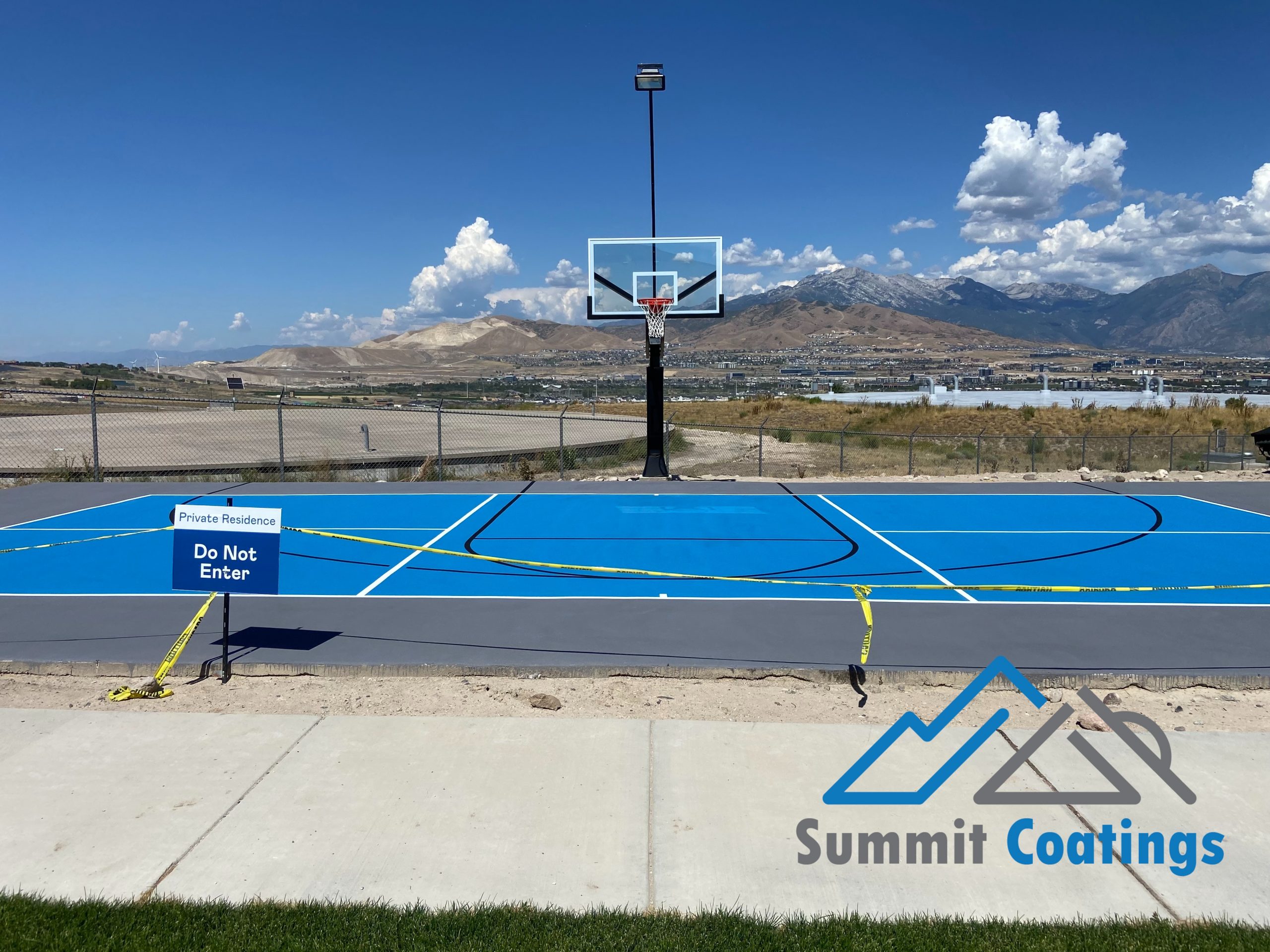
Summit Coatings provides sport court coating services and can discuss resurfacing for residential, community, and multi-use spaces. The company’s overlay sport court work also shows how decorative and functional surface goals can be coordinated.
Lines should follow the intended court layout
Pickleball lines need accurate dimensions and strong contrast. A multi-use court adds another design decision: how to keep overlapping basketball, tennis, or other markings readable without creating visual confusion.
Before striping begins, confirm the intended layout, line colors, net arrangement, and any shared-use priorities. The crew should measure from defined reference points rather than copying worn lines that may already be inaccurate.
USA Pickleball’s official resources help owners understand standard layouts, but field conditions still matter. Fences, posts, slopes, and the available paved area can affect how a conversion or multi-court arrangement is planned.
Utah weather affects scheduling and care
Outdoor coatings need suitable surface temperature, air temperature, and dry-weather windows. A pleasant afternoon does not guarantee that overnight conditions will remain within the product requirements. Morning dew and recent precipitation can also affect when work begins.
After application, keep players, pets, sprinklers, landscape crews, and wheeled equipment off the surface until the contractor releases it for use. Premature traffic can mark the coating or contaminate an unfinished layer.
Long-term care should remain simple and gentle. Remove leaves and debris, address drainage obstructions, and use cleaning methods approved for the installed system. Avoid dragging benches, goals, or heavy equipment across the court. Report new cracks or persistent ponding before they become larger maintenance issues.
Questions to ask a resurfacing contractor
Use the site visit to get clear answers about the full system:
- What is the condition of the existing base and coating?
- Which cracks or drainage issues need separate attention?
- What preparation method will be used?
- Which coating layers and textures are specified?
- How will line placement be verified?
- What environmental conditions are required during installation?
- When can the court return to play?
- What maintenance is recommended for this system?
The response should connect the observed court condition to the proposed work.
Common questions about pickleball court resurfacing
Can a tennis court be converted for pickleball?
Many existing courts can support pickleball layouts, but the available dimensions, net setup, condition, drainage, and shared use need review. A contractor can help determine whether resurfacing and restriping fit the site.
Will resurfacing remove every crack permanently?
No surface system can honestly promise that an active crack will never return. Repair selection and expectations should reflect the base condition and evidence of movement.
Can play resume as soon as the lines look dry?
Not necessarily. Each layer needs the cure period specified for the system and weather. Wait until the contractor confirms the court is ready.
Does a faded court always need full resurfacing?
Not always. The decision depends on coating condition, texture, adhesion, repairs, and performance, not color alone. An inspection can separate routine cleaning from more extensive work.
Restore the surface from the base up
Successful pickleball court resurfacing begins with inspection, not paint. Drainage, cracks, adhesion, texture, and layout are reviewed before repairs and coating layers are selected. That process produces a court designed around how the surface actually performs.
Summit Coatings works throughout its Utah service area. If a residential or community court in the Salt Lake City region is fading, cracking, or holding water, contact Summit Coatings to arrange an on-site assessment.