If your driveway or patio is cracked, faded, and looking tired but the slab underneath is still solid, you don’t always have to tear it out and start over. A concrete overlay in Salt Lake City lets you resurface what you already have, giving worn concrete a fresh, durable finish for a fraction of the disruption of a full replacement.
At Summit Coatings, we work on concrete all over the Salt Lake Valley and into Utah County, and overlays are one of the most practical ways to bring an old slab back to life. Here’s how they work, when they make sense, and when replacement is still the smarter call.
What Is a Concrete Overlay?
A concrete overlay is a thin, bonded layer of specially formulated cement-based material applied directly over your existing concrete. Instead of demolishing and re-pouring, the contractor preps the old surface, repairs structural issues, and then resurfaces it with a new wear layer. The result is a fresh top surface that’s bonded to the slab you already own.
Overlays range from paper-thin decorative coatings to heavier textured systems built to take vehicle traffic. They can be smooth, stamped to mimic stone or brick, or finished with a slip-resistant texture. The key thing to understand is that an overlay restores the surface — it isn’t a fix for a slab that has failed structurally.
Types of Concrete Overlays
Not all overlays are the same. The right system depends on the condition of your concrete, where it is, and the look you’re after.
Microtopping
Microtoppings are very thin (often just a sixteenth to an eighth of an inch) and create a smooth, modern finish. They’re popular for patios, entryways, and interior floors where you want a clean, contemporary look. Microtoppings can be tinted and sealed but aren’t meant to bridge big cracks or heavy damage.
Stamped Overlays
Stamped overlays are applied a bit thicker and then imprinted with patterns and textures that imitate flagstone, slate, brick, or wood plank. This is a great option for patios and pool decks where homeowners want the upscale look of natural stone without the impact of ripping out and replacing the slab.
Spray-Down and Textured Overlays
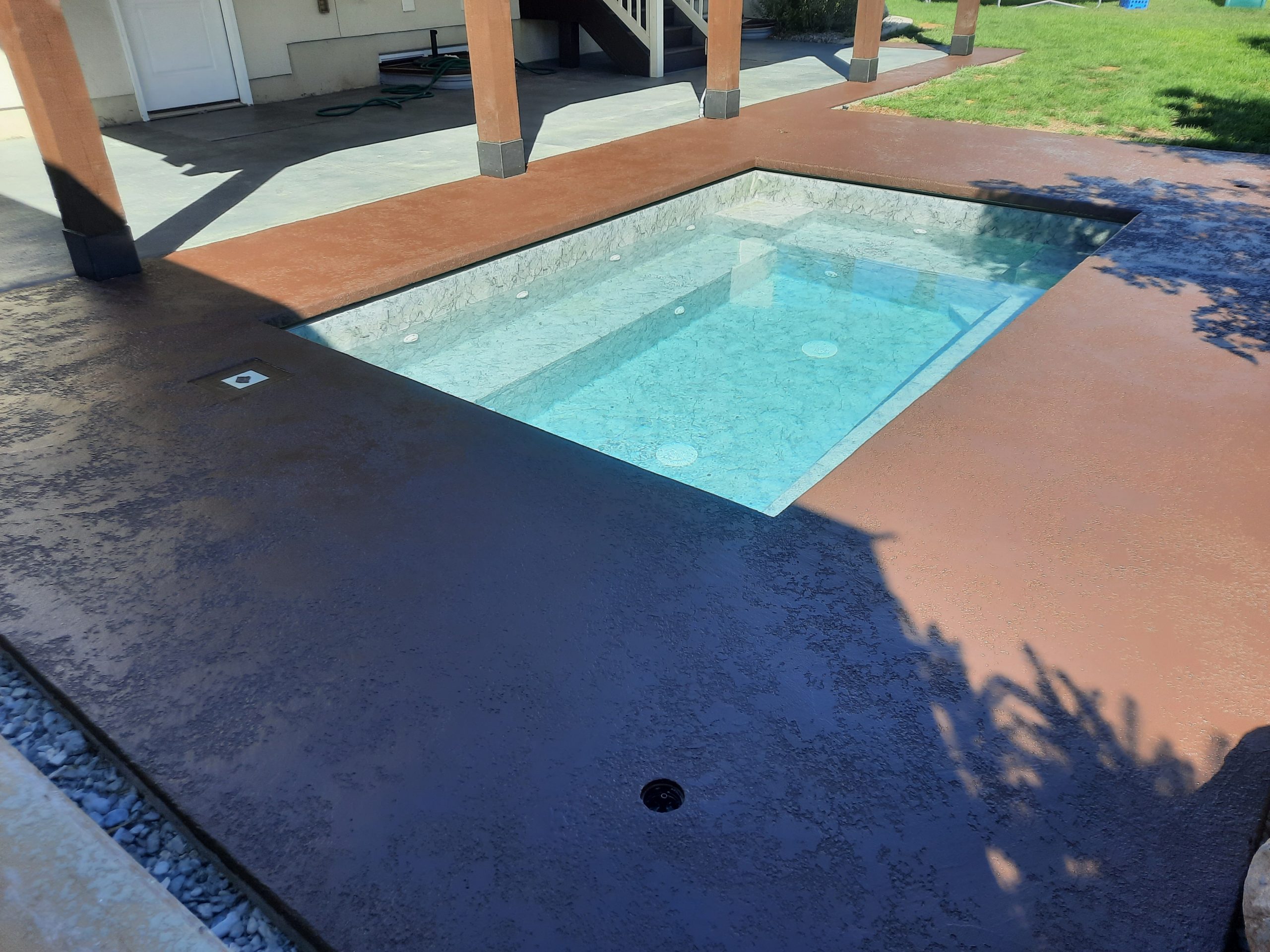
Spray-down (sometimes called knockdown or splatter) overlays add a textured, slip-resistant surface that holds up well outdoors. They’re a common choice for pool decks and patios because the texture stays grippy when wet and the lighter color reflects Utah’s intense summer sun instead of soaking up heat. For driveways and other high-traffic areas, a heavier troweled or broom-finished overlay gives you the durability you need underfoot and under tires.
Good Candidates for a Concrete Overlay
Overlays shine when the slab is fundamentally sound but the surface looks rough. You’re likely a good candidate if you have:
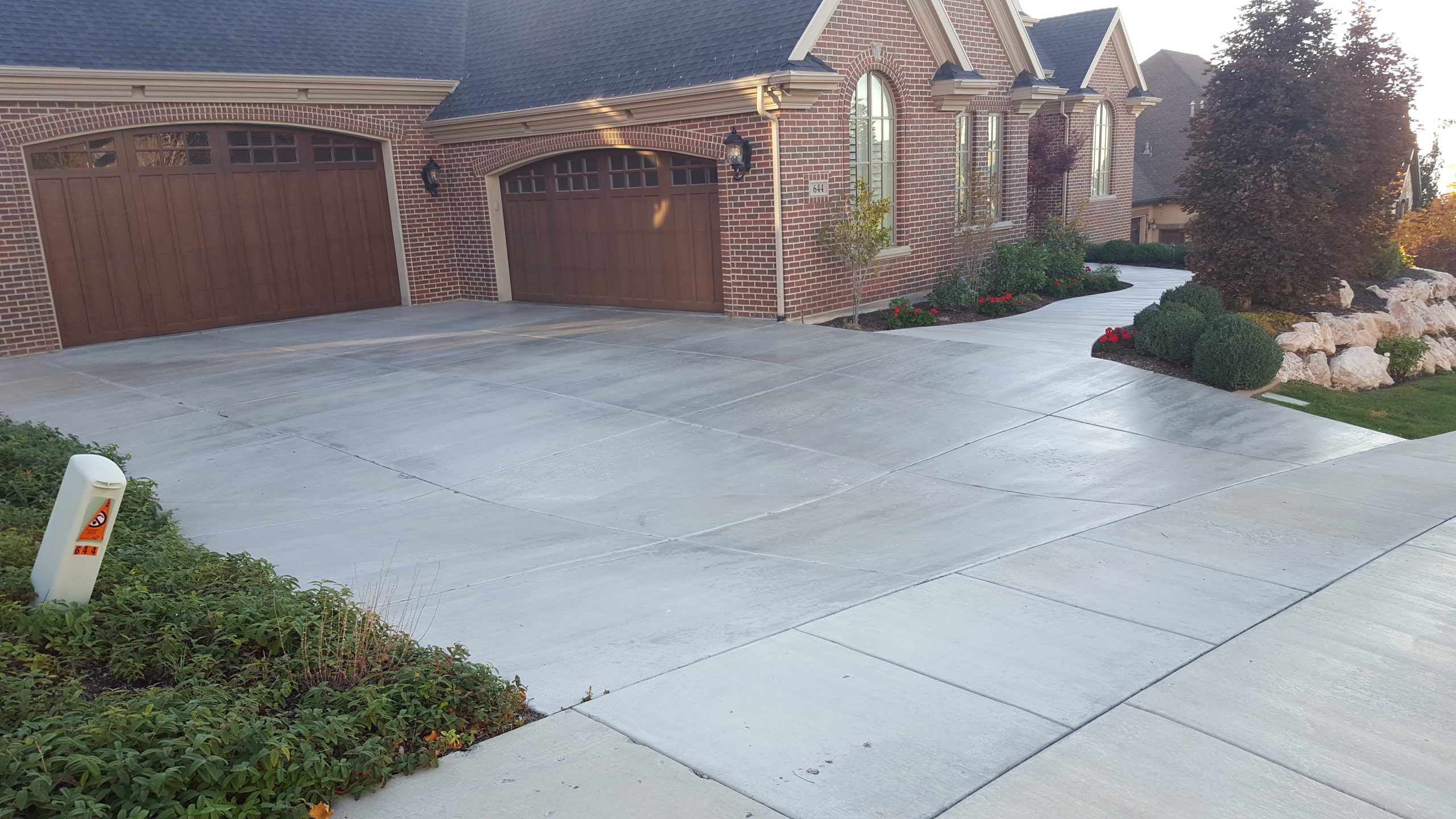
- Cracked or faded driveways with surface spider-cracking, discoloration, or a dull, worn finish
- Patios that have lost their color or developed minor surface flaking
- Pool decks that feel rough, look dated, or get uncomfortably hot in summer
- Garage floors with stains, pitting, or light surface wear (often paired with an epoxy or polyaspartic coating)
- Walkways and porches where you want a fresh, cohesive look without a teardown
The common thread is a slab that’s still doing its job. If the concrete is settled, heaved, or structurally cracked all the way through, an overlay alone won’t solve the underlying problem.
How Utah’s Climate Wears Down Old Concrete
Concrete along the Wasatch Front takes a real beating, and it helps to understand why so many local slabs start looking rough after a decade or two.
- Freeze-thaw cycles: Our winters swing above and below freezing constantly. Water seeps into tiny surface pores, freezes, expands, and breaks the surface apart little by little. Over many seasons that’s what causes flaking, spalling, and surface cracking.
- Intense summer UV: High-altitude Utah sun fades color, breaks down old sealers, and bakes exposed concrete, especially on south-facing driveways and pool decks.
- Dry air and temperature swings: Big daily temperature changes and low humidity cause concrete to expand and contract, which stresses the surface over time.
A quality overlay helps on all three fronts. A fresh, properly sealed wear layer closes up the porous old surface so water can’t get in and freeze, adds UV resistance to fight fading, and gives you a tougher top coat built to handle the local climate. That’s a big part of why concrete resurfacing in Utah is so popular — it directly addresses the conditions that wore the slab down in the first place.
The Concrete Overlay Install Process
A good overlay is mostly about preparation. Skip the prep and the coating won’t bond, no matter how nice the product is. Here’s the general process Summit Coatings follows:
- Inspection: We check whether the slab is a true overlay candidate or whether deeper issues mean replacement is the better path.
- Surface prep: The concrete is cleaned and profiled — usually by grinding or shot-blasting — so the new layer can grip the old surface.
- Repairs: Cracks, chips, and low spots are filled and leveled, and control joints are addressed so they don’t telegraph through the new finish.
- Overlay application: The chosen system is troweled, sprayed, or stamped on at the correct thickness, then textured or patterned as needed.
- Color and sealing: Stain or tint is applied if desired, then a protective sealer locks in the finish and adds resistance to UV, moisture, and stains.
Most residential overlay projects wrap up in a few days, with cure and recoat times depending on the system and the weather. We’ll always walk you through the timeline before we start.
How Long Does a Concrete Overlay Last?
With proper installation and basic upkeep, a quality overlay typically lasts 10 to 20 years or more, and many decorative systems hold up beautifully when they’re resealed periodically. Lifespan depends on the system used, which factors traffic the surface sees, sun exposure, and whether the sealer is refreshed every few years. Driveways carrying vehicles will naturally see more wear than a covered patio. Resealing every two to three years is the single best thing you can do to protect the investment in Utah’s freeze-thaw climate.
Overlay impact vs. Full Replacement
The biggest reason homeowners choose resurfacing is impact. Full tear-out and replacement means demolition, hauling, new forms, a fresh pour, and a long cure before you can use the surface again. An overlay reuses the slab you already paid for.
For most sound slabs, an overlay delivers a like-new surface at a meaningful savings and with far less downtime.
When Replacement Is the Better Call
We’d rather tell you the truth than sell you a finish that won’t last. An overlay is the wrong choice when:
- The slab has large structural cracks or sections that move when you step on them
- The concrete has heaved or settled unevenly, often from soil movement or poor drainage
- There’s severe spalling where large areas have crumbled down past the surface
- The underlying base or drainage has failed, which would cause a new overlay to crack again
In those cases, an overlay would just hide a problem that comes right back. A quick inspection tells us which path actually protects your money. If you’re weighing overlays for a larger project like a residential sport court, the same logic applies — the base has to be right before any resurfacing goes down.
Get Your Concrete Resurfaced in Salt Lake City
Whether it’s a faded driveway, a rough pool deck, or a patio that’s seen better days, resurfacing is often the fastest, most practical way to get a fresh, durable surface that stands up to Utah weather. Summit Coatings serves Salt Lake City, Sandy, Draper, Lehi, Provo, Orem, Pleasant Grove, Park City, and the surrounding communities. Learn more about the work we do across the Salt Lake City area, then reach out when you’re ready.
Get a free concrete overlay quote in Salt Lake City and we’ll take a look at your slab, talk through your options, and give you honest guidance on whether an overlay or replacement makes more sense.
Frequently Asked Questions
Can you put a concrete overlay over a cracked driveway?
Often, yes. Surface cracks and spider-cracking can be repaired and resurfaced as part of the overlay process. The exception is large structural cracks or sections that shift, which signal a slab problem an overlay can’t fix. An on-site inspection is the only way to know for sure which category your driveway falls into.
which factors does a concrete overlay impact in Salt Lake City?
How long will a resurfaced concrete surface last in Utah’s climate?
With proper installation and periodic resealing, a quality overlay commonly lasts 10 to 20 years or more. Utah’s freeze-thaw cycles and strong summer UV make resealing every two to three years especially worthwhile to keep moisture out and color fresh.
Is a concrete overlay better than tearing out and replacing the slab?
When the existing slab is structurally sound, an overlay is usually faster, less expensive, and less disruptive than full replacement while delivering a like-new finish. If the concrete is heaved, settled, or badly cracked through, replacement is the better long-term investment. We’ll give you a straight answer after looking at your concrete.